2026-11-09 · Pete Olson
What To Do After A Frozen Pipe Burst In Minneapolis Winters
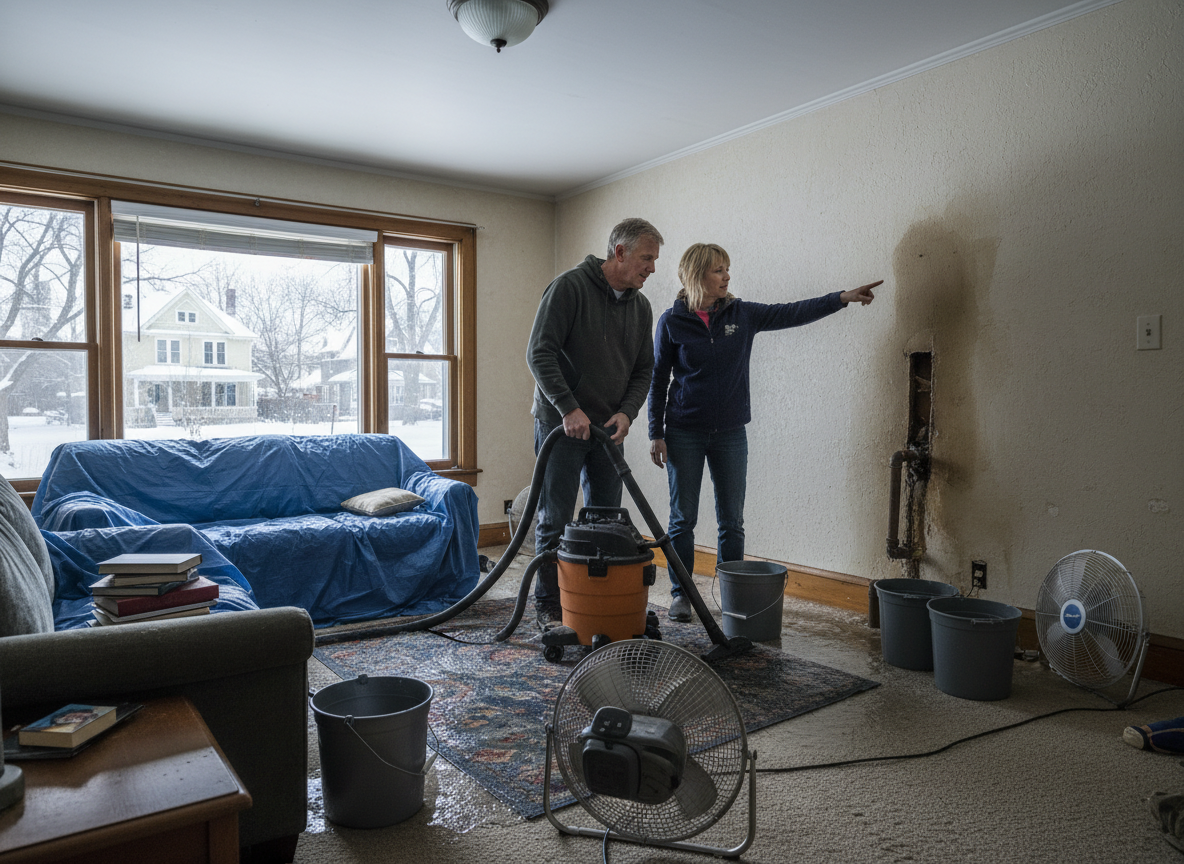
When a pipe freezes and bursts during a Minneapolis winter, shut off the main water valve at once and move valuables out of the affected space. In Hennepin County homes built before 1970, copper and galvanized lines often run through exterior walls in areas such as Powderhorn and Longfellow, so bursts frequently hit kitchens and bathrooms first. Open cabinet doors under sinks to release trapped heat and avoid further freezing while you locate the valve. Call a plumber only after water flow stops to prevent additional pressure on weakened joints.
Shut Off the Water and Ensure Safety
Locate the main shutoff near the water meter, usually in the basement or utility room of Minneapolis homes. In Northeast and North Loop properties, older valves may stick from disuse, so apply steady pressure rather than forcing them. Turn off electricity to the affected rooms at the breaker panel to reduce shock risk from standing water. If the burst occurs near the Mississippi Riverfront or Lake Harriet, check for sewage backup since older combined sewer lines can surcharge during rapid melts. Wear rubber boots and avoid touching metal pipes until power is isolated. These steps limit water volume and protect occupants before any drying begins.
Document the Damage for Insurance
Photograph every wet surface, including baseboards, drywall, and flooring, before moving items. Note the time and date on each image, especially useful for claims involving homes in Uptown or Cedar-Riverside where insurance adjusters visit frequently after cold snaps. Measure the affected square footage and list displaced furniture or appliances. Keep a written timeline of when you discovered the burst and what actions followed. Store copies of photos off-site or in cloud storage. This record supports later discussions with adjusters and helps restoration crews target hidden moisture behind walls common in Minneapolis construction.
Begin Water Removal and Drying
Use a wet-dry vacuum on hard surfaces first, then place fans and dehumidifiers to pull moisture from subfloors and joists. In winter, indoor humidity stays low outside but rises quickly inside heated spaces, so run equipment continuously for at least 48 hours. Check moisture levels in carpet padding and insulation with a meter; saturated materials in Phillips or Camden homes often require removal rather than drying. Open windows briefly on days above freezing to exchange air, but close them when temperatures drop below 20°F to avoid refreezing pipes. Monitor for musty odors that signal early microbial growth.
Prevent Mold Growth in Humid Conditions
Minneapolis humid continental climate keeps summers warm and winters dry, yet indoor heating creates pockets of trapped moisture after a burst. Remove wet drywall at least 12 inches above the water line and discard porous insulation. Apply an antimicrobial solution to exposed framing only after water extraction finishes. In Southwest and University neighborhoods, older plaster walls hold moisture longer, so test behind them with a probe. Continue dehumidification until readings fall below 15 percent moisture content. These measures reduce the chance of mold colonies forming within 72 hours in typical Minneapolis winter conditions.
When to Call Professionals for Water Damage Repair
Contact experienced crews when water reaches multiple rooms or enters finished basements common in Longfellow and Near North. Technicians bring commercial-grade extractors and drying equipment sized for Hennepin County homes. They also coordinate with plumbers to repair the original pipe break. For properties near the Stone Arch Bridge or Target Field, crews familiar with dense urban layouts can navigate tight access points faster. Review the full process in Handling Water Damage From Minneapolis Spring Thaws and compare typical costs for water damage restoration in Minneapolis. Schedule service through water damage restoration or water damage repair pages to match your timeline.