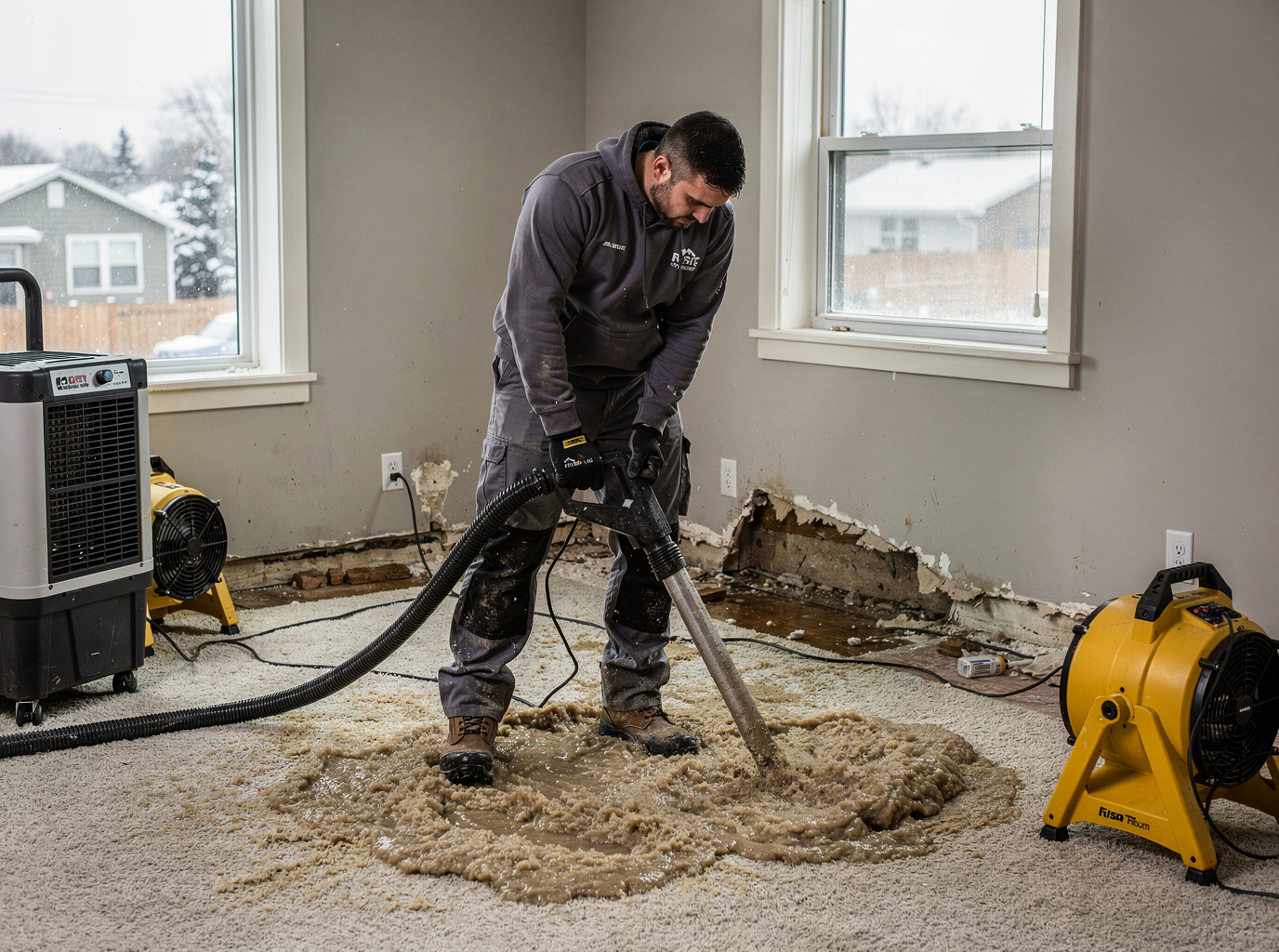
Minneapolis homes built before 1950 in neighborhoods such as Phillips, Camden, and Near North often have cast-iron or galvanized plumbing that fails during January thaws when temperatures swing above freezing. Water migrates along joist bays into plaster walls and oak floors, requiring targeted demolition rather than whole-room gutting to keep costs down. Crews arriving from the 4901 N Queen Ave shop carry moisture meters calibrated for Minnesota winters so hidden pockets behind lath do not seed mold once humidity climbs in July.
Properties along the Mississippi Riverfront in the North Loop and Cedar-Riverside sit on clay-heavy soils that hold water against foundations for weeks after heavy spring rains. Sump pumps tied into old combined sewers can back up during storms, pushing river sediment into basements. Restoration here includes negative-air machines to capture fine silt before it dries into airborne dust that later stains drywall in Uptown or Powderhorn homes.
Summer humidity in Hennepin County pushes indoor relative humidity above 70 percent even after extraction, so drying targets must stay below 12 percent moisture content on subfloors. Technicians monitor Target Field-area commercial buildings and University student housing with data loggers for 72 hours post-job to confirm conditions before drywall replacement. Nearby Bloomington and Edina jobs often involve finished lower levels where carpet pad must be removed within 24 hours to prevent delamination.
Technician insight
In Minneapolis the thing that catches most people out with water damage restoration is how quickly snow melt from the last big storm finds the old clay tile drains under homes in Camden and Northeast; once it reaches the plaster you have about 48 hours before the lath starts to rot and you lose the option of spot repairs.
Northeast Minneapolis Burst Pipe
A 1928 duplex in Northeast experienced a second-floor supply line freeze during a January cold snap. Water traveled along floor joists into the first-floor dining room and kitchen. Extraction and targeted drying prevented mold in the plaster walls; only two sections of flooring needed replacement before the owners returned within five days.
Water Damage Restoration Service Services We Offer
✓Basement Water Extraction
Rapid removal of standing water from Minneapolis basements after snow-melt or sewer backup, protecting older foundations common in Longfellow and Southwest neighborhoods.
✓Frozen Pipe Burst Repair
Isolation and drying of water from burst lines in pre-war homes throughout Camden and Near North, followed by targeted wall and ceiling restoration.
✓Riverfront Flood Drying
Specialized equipment and monitoring for properties near the Mississippi Riverfront and Lake Harriet that experience prolonged groundwater intrusion.
✓Mold Prevention After Water Damage
Antimicrobial treatment and dehumidification protocols tailored to Minneapolis humid summers to stop growth in Uptown and Powderhorn structures.
✓Commercial Water Damage Restoration
Large-scale extraction and drying for retail and office spaces near Mall of America and Target Field where downtime must be minimized.
Water Damage Restoration Service Cost in Minneapolis, MN
| Service | Typical Range | What Affects It |
|---|---|---|
| Minor Localized Leak | $400–$900 | Single room, quick extraction, no hidden cavities |
| Basement Flood Extraction | $1,200–$3,500 | Sewer or river water, multiple rooms, sediment removal |
| Full Home Drying After Burst | $2,800–$6,000 | Winter pipe failure, multi-level migration, extended monitoring |
| Commercial Space Restoration | $3,500–$9,000 | Retail or office near Mall of America or downtown, after-hours scheduling |
Ranges are typical for Minneapolis, MN and confirmed with an exact written quote before any work starts.
How it works
- 1
On-Site Assessment
Technician inspects affected areas in the specific Minneapolis neighborhood, documents moisture levels, and identifies hidden migration paths common in older Hennepin County housing.
- 2
Water Removal
Extraction equipment pulls standing water and sediment while protecting oak floors and plaster typical of homes in Northeast and Phillips.
- 3
Structural Drying
Air movers and dehumidifiers run until readings reach safe levels, with daily checks to handle the rapid humidity swings of local summers.
- 4
Restoration And Repairs
Replacement of damaged drywall, flooring, and trim using materials matched to the home's age and style in the original neighborhood.
Pricing
Costs depend on water volume, affected square footage, and whether hidden cavities require additional drying time in older Minneapolis homes.