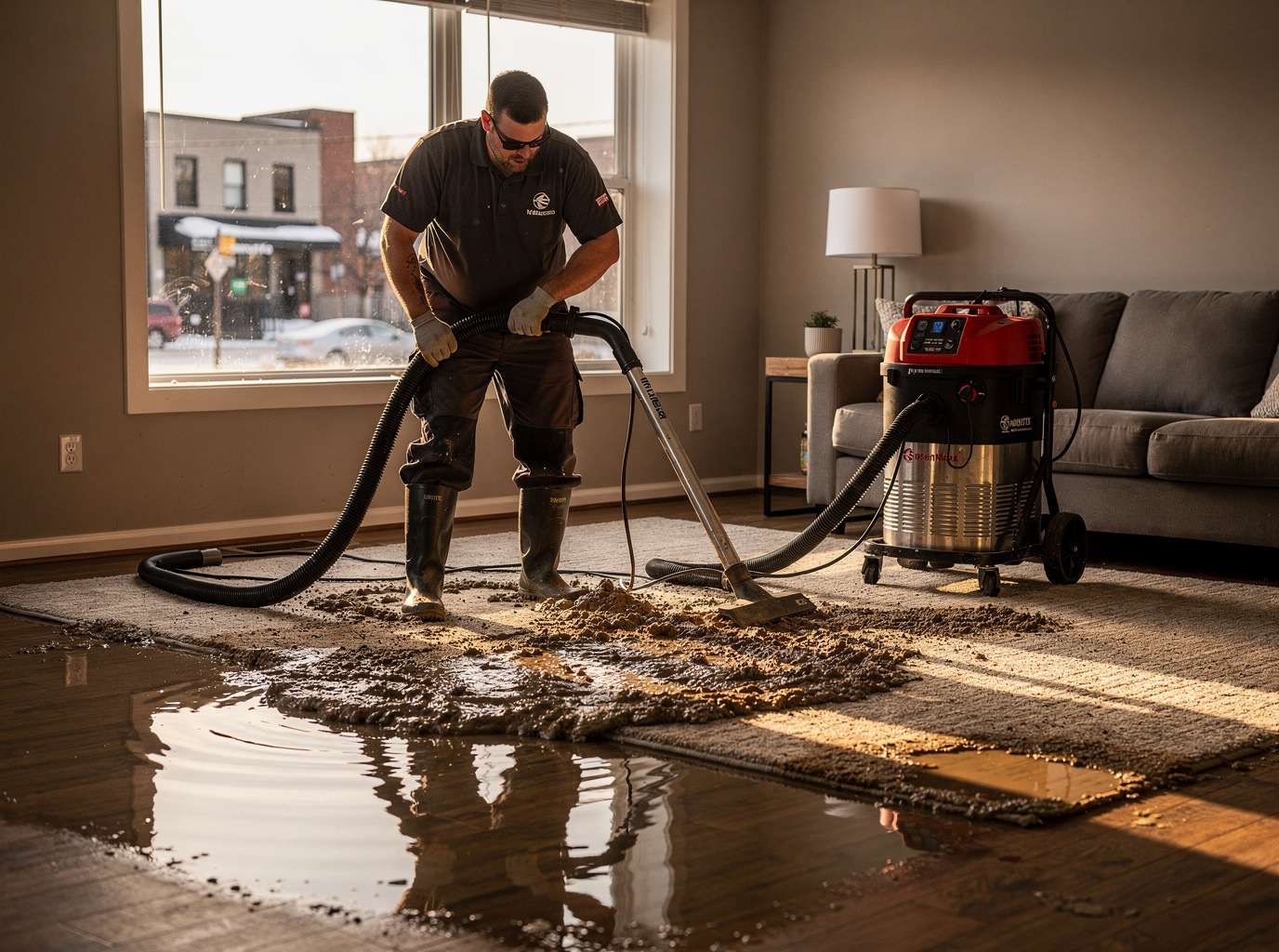
Minneapolis homes built before 1950 in neighborhoods like Northeast and Camden often have plaster walls and hardwood over joists that trap water quickly after a pipe burst or sewer backup. Cold winters bring frozen supply lines and ice dams along the Mississippi Riverfront, while summer humidity slows natural evaporation in basements near Powderhorn and Longfellow. Extraction crews must pull standing water before it reaches finished spaces or migrates to shared walls in duplexes common on the North Side.
Equipment choice changes with the season. In winter, sub-zero air outside the 4901 N Queen Ave shop makes portable LGR dehumidifiers essential once water is removed, because outside venting pulls in moist air. Summer jobs near the University or Cedar-Riverside require extra air movers to counter the humid continental climate that keeps moisture readings high for days. Technicians check for hidden pockets behind built-in cabinetry and under laminate flooring installed over older slab-on-grade foundations.
Electrical safety comes first in older stock. Many Uptown and Phillips homes still have knob-and-tube wiring that cannot handle the amperage of high-volume pumps without tripping panels or creating shock hazards. Crews isolate circuits and use battery or generator power when working near the Mississippi Riverfront where groundwater tables sit close to basements. Documentation of moisture levels at multiple depths helps homeowners understand why carpet pad and baseboard must be removed even when surface water appears gone.
Technician insight
In Minneapolis the thing that catches most people out with Emergency Water Removal is how quickly water travels under the hardwood floors in Northeast and Camden homes built on clay soil; once it reaches the joists you lose a day of drying time if you do not pull the baseboards on day one.
Northeast Minneapolis Burst Pipe
A supply line split overnight in a 1920s duplex near the Mississippi Riverfront. Water reached the finished basement and migrated under the oak floor into the neighboring unit. Extraction removed standing water the same morning, baseboards were removed to allow airflow under the hardwood, and drying equipment ran for four days until readings returned to normal.
Emergency Water Removal Services We Offer
✓Basement Flood Extraction
Remove standing water from Minneapolis basements after heavy rain or sewer backups common in low-lying areas like Camden and Near North.
✓Burst Pipe Water Removal
Rapid extraction following supply-line failures that spike during January freezes in Northeast and Longfellow homes with older copper or galvanized lines.
✓Appliance Leak Cleanup
Extract water from washing machine or water-heater failures that affect finished lower levels in North Loop and Downtown condos.
✓Storm and Sump Failure Extraction
Clear water after power outages disable sump pumps during spring thaws or summer storms affecting Southwest Minneapolis and Edina border properties.
✓Crawl Space Water Removal
Pull water from dirt or gravel crawl spaces under older homes in Phillips and Powderhorn where moisture leads to mold on floor joists.
Emergency Water Removal Cost in Minneapolis, MN
| Service | Typical Range | What Affects It |
|---|---|---|
| Initial Extraction Visit | $350–$650 | Varies with square footage and whether water is clean or contaminated. |
| Daily Equipment Rental | $125–$225 | Air movers and dehumidifiers; longer runs needed in humid summer months. |
| Crawl Space Or Basement Add-On | $200–$400 | Extra time for low clearance or dirt floors common in pre-1960 homes. |
Ranges are typical for Minneapolis, MN and confirmed with an exact written quote before any work starts.
How it works
- 1
Arrival And Safety Check
Technician arrives within the service window, locates shutoffs, and verifies electrical isolation before any equipment enters the structure.
- 2
Standing Water Extraction
High-volume pumps and wands remove bulk water from floors, then extract from carpets, pads, and low areas while protecting adjacent rooms.
- 3
Moisture Mapping
Readings taken on walls, subfloors, and contents to mark hidden saturation before drying equipment is placed.
- 4
Initial Containment And Drying Setup
Air movers and dehumidifiers positioned, containment barriers installed, and daily monitoring scheduled for the next phase.
Pricing
Pricing reflects water volume, depth of saturation, and access constraints typical in Minneapolis housing stock.