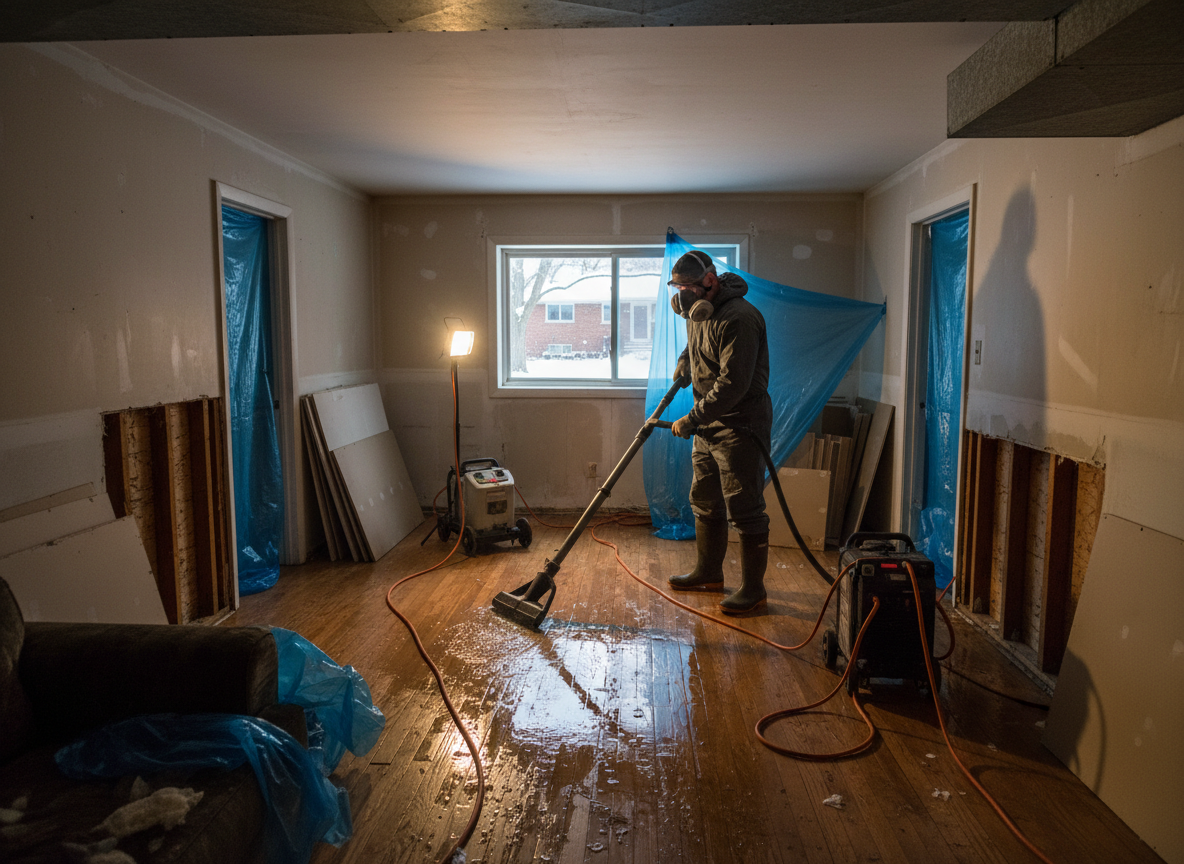
Minneapolis homes built before 1950 in neighborhoods such as Northeast, Camden and Near North often have balloon-frame construction and knob-and-tube wiring that complicate drying after a pipe burst. Cold winters cause supply lines in unheated crawl spaces to freeze and split, sending water into plaster walls that absorb moisture differently than modern drywall. Crews must remove baseboards and drill weep holes to prevent hidden mold growth behind lath.
The Mississippi Riverfront and areas near Lake Harriet see frequent groundwater seepage during spring thaw when the water table rises quickly in Hennepin County clay soils. Sump pumps in Powderhorn and Longfellow basements can fail during power outages common after heavy snow, allowing several inches of water to stand against foundation walls for days. Restoration requires separating wet insulation from joists and using low-grain refrigerant dehumidifiers sized for the square footage.
Commercial properties near Target Field and the North Loop face different challenges when stormwater enters through loading docks or flat-roof drains clogged by leaves. These spaces often contain finished ceilings and server rooms where even small leaks require immediate negative-air containment to protect electronics. Technicians document moisture readings with thermal imaging before and after drying to satisfy insurance adjusters working in Hennepin County.
University-area rentals and Cedar-Riverside apartments frequently experience sewage backups from aging combined sewer lines during intense summer storms. Technicians use air movers directed at subfloors while monitoring relative humidity to stay below 50 percent, preventing secondary damage to hardwood floors common in these buildings.
Technician insight
In Minneapolis the thing that catches most people out with Water Damage Restoration is how quickly snow melt in March saturates clay soils around 1920s homes in Northeast and Camden, pushing water through mortar joints that newer sealants never reach.
Spring Melt in a Longfellow Basement
A homeowner in Longfellow noticed water rising along the east foundation wall after a rapid thaw. Inspection found the sump pump had frozen during a cold snap and the clay soil held water against the 1930s rubble foundation. Extraction and targeted drying of joists and subfloor prevented mold while the system was upgraded before the next freeze.
Water Damage Restoration Services We Offer
✓Basement Water Extraction
Removes standing water from Minneapolis basements after snow melt or sump failure, then applies industrial drying to protect joists in older Northeast and Camden homes.
✓Burst Pipe Drying
Locates and dries water from frozen supply lines that split during winter, using moisture meters on plaster walls in Uptown and Longfellow properties.
✓Flood Damage Restoration
Handles river or stormwater intrusion near the Mississippi Riverfront and Lake Harriet, including structural drying and content handling for Hennepin County residences.
✓Sewage Cleanup
Extracts contaminated water from backups common in Cedar-Riverside and University rentals, followed by disinfection and odor removal.
✓Structural Drying After Leaks
Dries subfloors and walls in North Loop commercial spaces and Phillips apartments where hidden moisture can affect wiring and finishes.
Water Damage Restoration Cost in Minneapolis, MN
| Service | Typical Range | What Affects It |
|---|---|---|
| Initial Assessment | Free | During listed business hours at 4901 N Queen Ave |
| Water Extraction | $400–$1,200 | Varies by depth and access in older basements |
| Drying Equipment Rental | $150–$450 per day | Number of units needed for Minneapolis humidity levels |
| Sewage Contaminated Cleanup | $800–$2,500 | Includes disinfection in combined-sewer areas |
Ranges are typical for Minneapolis, MN and confirmed with an exact written quote before any work starts.
How it works
- 1
On-Site Assessment
Technician inspects the source, measures moisture in affected materials, and maps water migration through Minneapolis home construction.
- 2
Water Removal
Pumps and vacuums extract standing water from basements and floors in neighborhoods like Powderhorn and Southwest.
- 3
Drying and Dehumidification
Air movers and dehumidifiers run until readings reach safe levels, accounting for cold winter air or humid summer conditions.
- 4
Restoration and Monitoring
Remove damaged materials, sanitize, and recheck moisture before returning the property to pre-loss condition.
Pricing
Pricing depends on water volume, affected square footage, and whether contaminated materials require disposal.