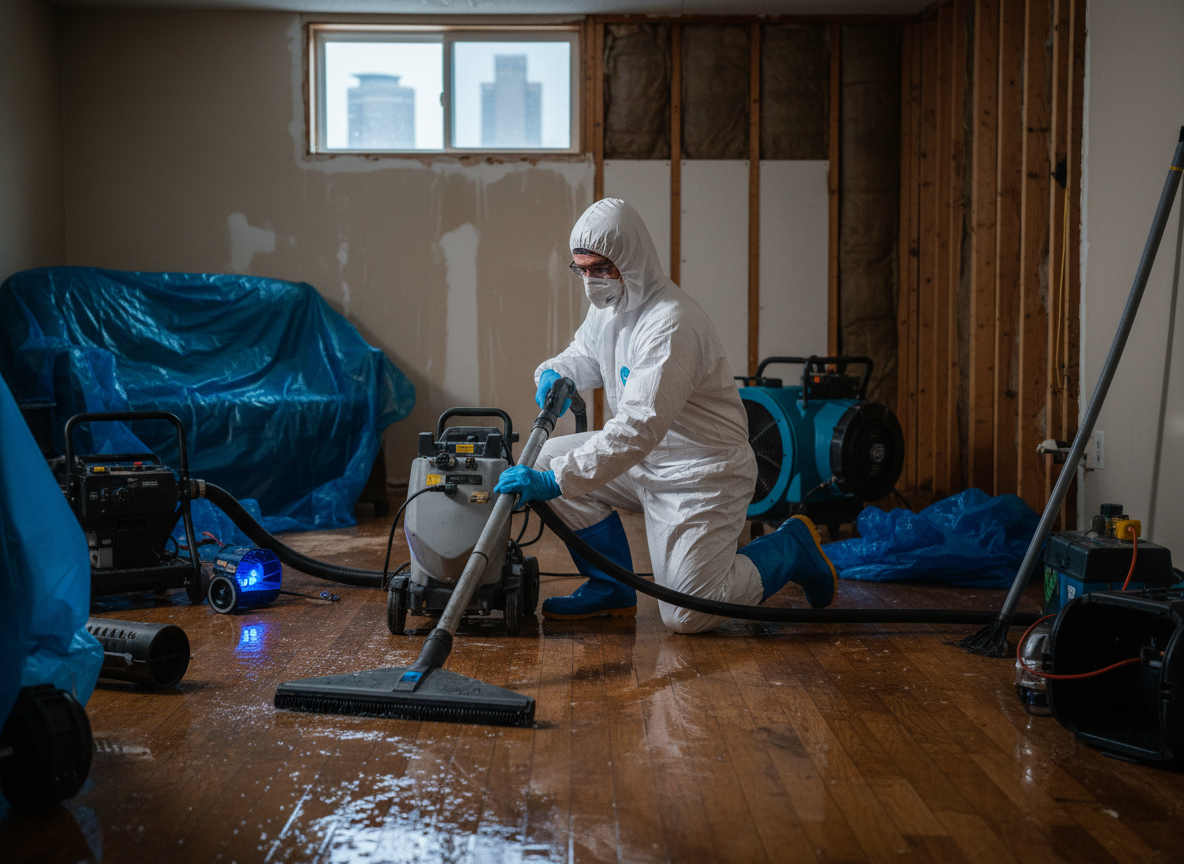
Minneapolis housing stock from the early 1900s in neighborhoods like Northeast, Camden, and Near North often features plaster walls over lath and balloon framing that trap moisture after leaks. Winters with extended subzero stretches cause supply lines to split inside exterior walls, sending water behind baseboards and into joist bays. Crews must open cavities quickly to prevent hidden rot along the Mississippi Riverfront where humidity lingers even in cold months.
Warm humid summers bring heavy rains that overwhelm older clay-tile sewer laterals in Powderhorn and Longfellow, pushing water into basements built below grade. Extraction equipment must account for finished lower levels common in Southwest and University areas where finished ceilings hide ductwork and electrical runs. Skipping thorough drying of subfloors leads to cupping hardwood and mold growth under carpet pads within days.
Repair work here routinely includes selective removal of saturated drywall up to 18 inches above the water line, followed by negative-air drying to protect adjacent rooms. Homes near Lake Harriet and the Stone Arch Bridge frequently need targeted insulation replacement because cellulose settles and holds moisture against rim joists. Technicians check for knob-and-tube wiring before introducing high-velocity air movers to avoid creating new hazards.
Technician insight
In Minneapolis the thing that catches most people out with water damage repair is how quickly moisture travels upward through balloon-framed walls in pre-1940 homes in Northeast and Near North. A small pipe leak on the second floor can saturate plaster two stories down before anyone notices, especially after a sudden January freeze. We always pull baseboards early and check rim joists because the clay soils here hold water against foundations long after the rain stops.
Winter Pipe Burst in Northeast Minneapolis
A supply line split during a cold snap in a 1920s duplex near the Mississippi Riverfront. Water migrated behind plaster walls into the first-floor dining room and down into the basement joist bays. We opened select wall sections, extracted standing water, ran drying equipment for four days, then replaced damaged plaster and insulation without disturbing the original hardwood floors.
Water Damage Repair Services We Offer
✓Emergency Water Extraction
Rapid removal of standing water from basements and first floors using truck-mounted pumps and portable extractors suited to Minneapolis row homes and multi-unit buildings.
✓Structural Drying and Dehumidification
Placement of commercial air movers and dehumidifiers to pull moisture from joists, subfloors, and plaster in older Hennepin County homes after pipe bursts or storms.
✓Drywall and Insulation Replacement
Cut-out and reinstall of affected drywall sections plus insulation replacement in walls and ceilings common in Northeast and Camden properties.
✓Flooring Restoration After Water Damage
Drying, repair, or replacement of hardwood, laminate, and carpet in Uptown and North Loop homes where water migrates under finished surfaces.
✓Ceiling Leak Repair
Location and sealing of roof or plumbing leaks followed by ceiling restoration in multi-story homes near the University and Phillips neighborhoods.
✓Sump Pump Failure Response
Assessment and repair of failed sump systems that allow groundwater intrusion during heavy rains in South Minneapolis and Edina border properties.
Water Damage Repair Cost in Minneapolis, MN
| Service | Typical Range | What Affects It |
|---|---|---|
| Initial Assessment and Moisture Mapping | $150–$350 | Higher when multiple floors or finished ceilings are involved |
| Water Extraction | $400–$1,200 | Varies with volume and access in older Minneapolis basements |
| Drying Equipment Rental per Day | $200–$450 | Number of air movers and dehumidifiers required |
| Drywall Removal and Replacement | $3–$7 per sq ft | Includes disposal and new material install |
| Flooring Drying or Removal | $500–$2,000 | Depends on hardwood versus carpet and subfloor condition |
Ranges are typical for Minneapolis, MN and confirmed with an exact written quote before any work starts.
How it works
- 1
Initial Assessment
Technician inspects all affected rooms, uses moisture meters on walls and floors, and documents water source before starting any removal work.
- 2
Water Removal
Standing water is extracted with pumps and wands, followed by removal of saturated carpet pads and loose debris from the site.
- 3
Drying Phase
Air movers and dehumidifiers run continuously while daily moisture readings track progress through wall cavities and subfloors.
- 4
Repairs and Restoration
Damaged materials are replaced, surfaces are sanitized, and final walkthrough confirms the space is dry and ready for finishing.
Pricing
Costs depend on square footage affected, depth of water intrusion, and whether hidden cavities require opening.