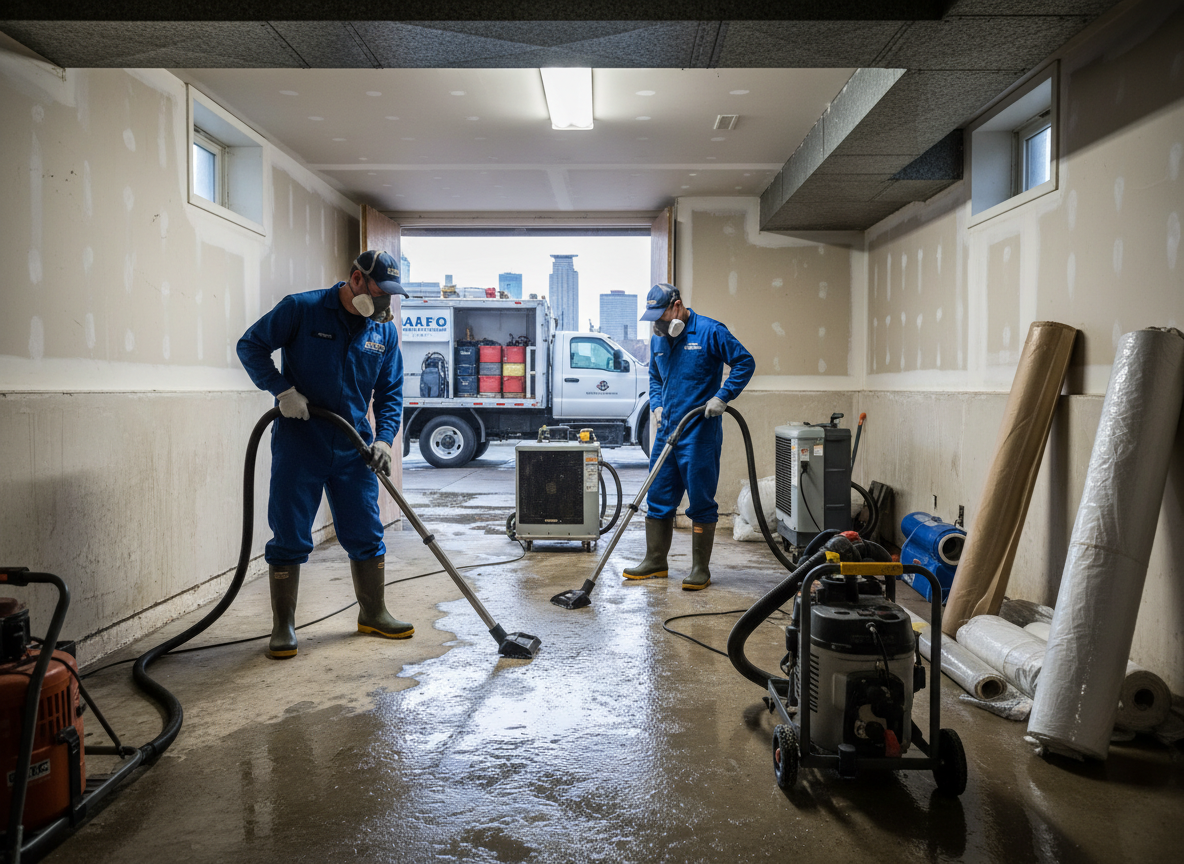
Minneapolis winters bring repeated freeze-thaw cycles that burst copper and PEX lines in homes built before 1970, especially in Northeast and Camden where many properties still have original plumbing. Water travels quickly through balloon-framed walls and into dirt basements common along the Mississippi Riverfront, creating hidden pockets behind lath and plaster that standard fans miss. We map moisture with thermal imaging before any demolition to avoid turning a contained leak into a full gut job.
Summer humidity above 70 percent slows natural drying in Uptown and Longfellow bungalows with thick stucco exteriors, so we run low-grain dehumidifiers tied to the home’s existing HVAC rather than portable units that overload circuits. River-adjacent properties in Phillips and Cedar-Riverside often face groundwater intrusion after heavy rains, requiring subfloor ventilation that accounts for the clay-heavy Hennepin County soil. We coordinate with city inspectors when work touches load-bearing joists near the Stone Arch Bridge corridor.
Older multi-family buildings in the North Loop and Downtown frequently share walls with neighboring units, so water migrates laterally through party walls and into adjacent units within hours. Extraction must include negative-air containment to protect neighbors, and we document every step for insurance adjusters who know the 55430 zip code patterns. This prevents the secondary mold claims that appear weeks later in humid summers.
Technician insight
In Minneapolis the thing that catches most people out with Emergency Water Damage Restoration is how quickly water moves through balloon-framed walls in homes built before 1950, especially in Northeast and Near North where knob-and-tube wiring and original plaster hide moisture that later shows up as mold after our humid summers.
Frozen Pipe Failure in Northeast Minneapolis
A homeowner in Northeast called after a cold snap burst a supply line on the second floor. Water had traveled down balloon framing into the first-floor plaster and basement joists. We extracted standing water, opened limited wall sections for drying, and ran dehumidifiers for four days until readings stabilized. The owner avoided full wall replacement and returned to normal use within a week.
Emergency Water Damage Restoration Services We Offer
✓Burst Pipe Water Extraction
Rapid removal of standing water from frozen or corroded pipes common in pre-1970 Minneapolis homes, followed by targeted drying to protect hardwood floors in neighborhoods like Longfellow.
✓Basement Flood Cleanup
Sump pump failure and river-adjacent groundwater extraction in Hennepin County basements, including silt removal and dehumidification to prevent mold in clay-soil areas.
✓Ceiling and Wall Cavity Drying
Moisture mapping and drying behind plaster and lathe in older Northeast and Powderhorn homes where water hides after roof or second-floor leaks.
✓Appliance Leak Containment
Immediate isolation and drying after water heater or washing machine failures that affect multiple units in North Loop and Downtown multi-family buildings.
✓Storm and Sewer Backup Restoration
Cleanup after heavy summer rains or combined sewer events that impact properties near Lake Harriet and the Mississippi Riverfront.
Emergency Water Damage Restoration Cost in Minneapolis, MN
| Service | Typical Range | What Affects It |
|---|---|---|
| Initial Emergency Response | $250–$450 | Includes travel within Minneapolis and basic extraction setup |
| Water Extraction Per 1,000 Sq Ft | $400–$800 | Varies with depth and sediment load from river or sewer backups |
| Drying Equipment Rental Per Day | $150–$350 | Number of units required based on home age and wall construction |
| Hidden Cavity Drying Add-On | $300–$600 | Needed for plaster walls typical in pre-1950 Northeast and Camden homes |
Ranges are typical for Minneapolis, MN and confirmed with an exact written quote before any work starts.
How it works
- 1
Emergency Dispatch
We answer calls during posted hours and arrive with extraction equipment sized for Minneapolis row houses and bungalows.
- 2
On-Site Moisture Assessment
Thermal imaging and moisture meters locate water migration paths through balloon framing and shared walls common in Hennepin County.
- 3
Water Removal And Containment
Pumps and vacuums extract standing water while negative air machines protect adjacent units in multi-family buildings.
- 4
Drying And Monitoring
Industrial dehumidifiers and air movers run until readings match pre-loss conditions, with daily logs for insurance.
- 5
Final Walk-Through
We verify all affected materials are dry and safe before handing the property back to the owner.
Pricing
Upfront written estimates provided after inspection; final cost depends on water volume, affected square footage, and hidden cavity access.