2026-11-09 · Pete Olson
Handling Water Damage From Minneapolis Spring Thaws
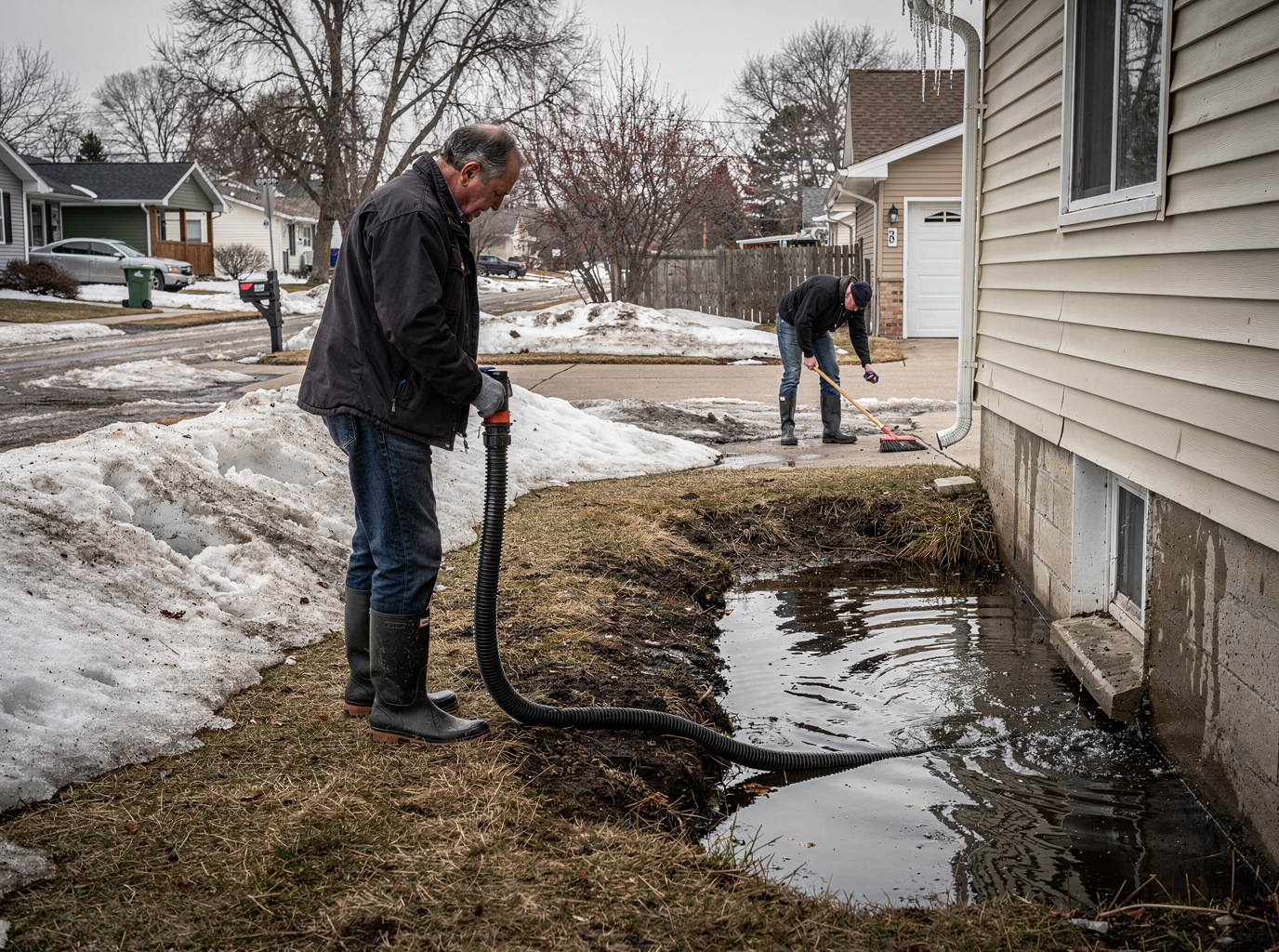
Minneapolis spring thaws frequently lead to water intrusion in basements and crawl spaces of pre-1950 homes throughout Hennepin County neighborhoods such as Northeast, Powderhorn, Longfellow, and Cedar-Riverside, where saturated soils from melting snow push against aging foundations along the Mississippi Riverfront and near Lake Harriet.
Climate and Terrain Factors Driving Thaw Damage
The humid continental climate brings heavy winter snow accumulation followed by quick warming periods that send runoff toward low-lying areas in Uptown, Phillips, and Camden. This pattern saturates clay-heavy soils common in Southwest Minneapolis, increasing hydrostatic pressure on foundations built before modern waterproofing standards. Properties near Minnehaha Falls and the Stone Arch Bridge see accelerated seepage when river levels rise from upstream melt. In contrast, flatter terrain in North Loop and University districts experiences slower drainage, allowing water to pool against slab-on-grade homes for days. These conditions differ markedly from the drier summers, requiring focused attention on exterior grading and sump systems during March and April transitions.
Typical Entry Points in Local Housing Stock
Older two-story homes in Near North and Powderhorn often have limestone or brick foundations that crack under freeze-thaw cycles, allowing meltwater to enter at mortar joints. Bungalows near Target Field and the Walker Art Center frequently report leaks at window wells when snow piles against south-facing walls melt rapidly. In Hennepin County areas bordering St. Paul, such as those along the river, sump pump failures during peak thaw hours compound problems because power outages coincide with high demand. Residents in Longfellow and Cedar-Riverside note that downspouts discharging too close to foundations accelerate soil saturation, a common issue in dense blocks where lot sizes limit proper drainage extensions.
Assessment and Initial Response Steps
Begin by documenting visible moisture lines on basement walls within 24 hours of thaw onset, noting any standing water depths in inches. Check exterior grading around the home perimeter for slopes directing water toward the structure, especially after heavy melt near Mall of America access roads that funnel runoff. Clear gutters and downspout extensions immediately to reduce volume entering the soil. For properties in Uptown or Southwest, inspect window wells and French drains for debris buildup from winter sand and salt. Avoid using household fans on wet materials until standing water is removed, as this can spread contaminants in humid conditions typical of early spring.
Professional Intervention Timing and Considerations
Contact specialists when water reaches electrical outlets or exceeds 2 inches across more than 100 square feet, particularly in older homes where mold risk rises within 48 hours. Water damage restoration teams familiar with Hennepin County conditions can extract water and dry structures using equipment sized for local humidity levels. For sudden pipe-related issues tied to prior freezes, review guidance in What To Do After A Frozen Pipe Burst In Minneapolis Winters. Cost factors vary by affected square footage and material type; see Typical Costs For Water Damage Restoration In Minneapolis for ranges based on similar local jobs. Emergency water removal becomes critical near the Mississippi Riverfront when levels crest, as delays allow deeper penetration into crawl spaces common in Bloomington and Edina border properties. Emergency water removal addresses these scenarios with targeted pumping before secondary damage sets in.