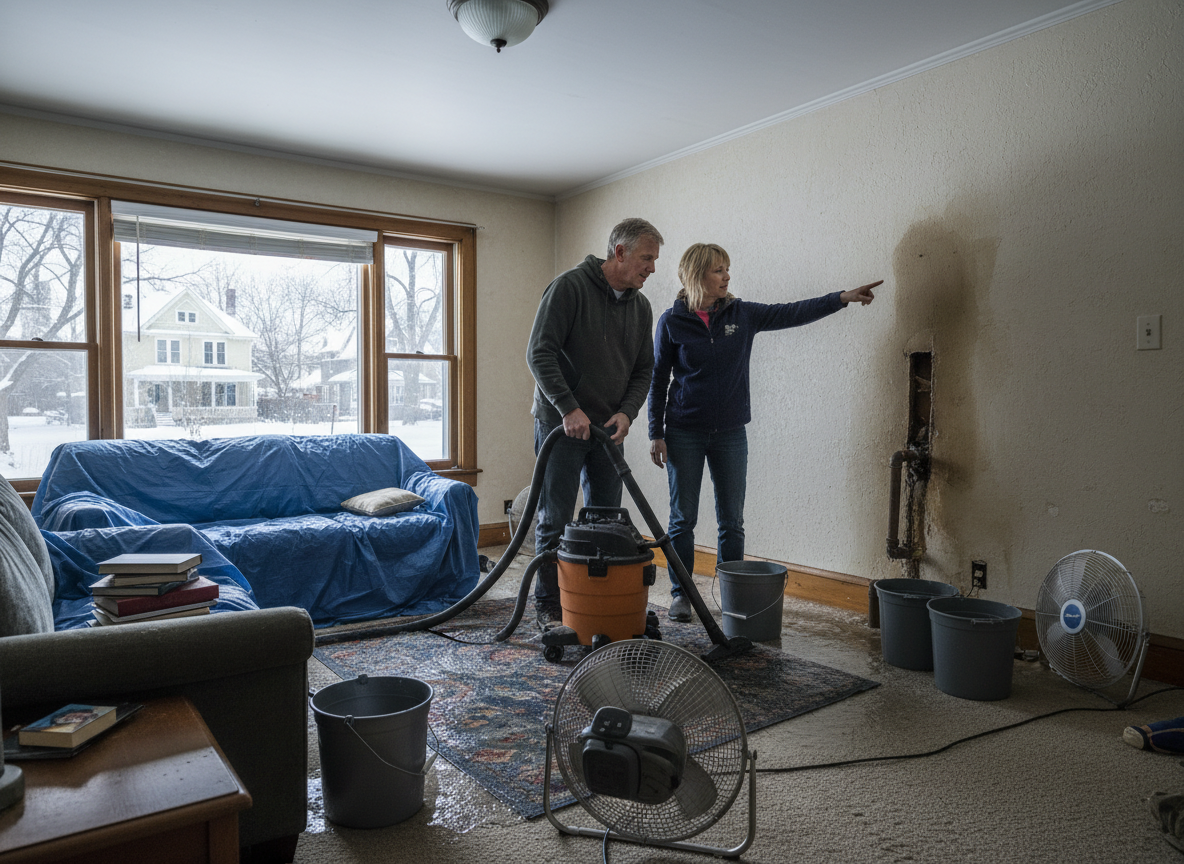
Stillwater sits along the St. Croix River with many 19th-century homes on narrow lots that back right up to the water. When spring snowmelt or heavy summer rains push the river over its banks, water enters basements through old fieldstone foundations common on the east side near the Lift Bridge. Our crew based at 4901 N Queen Ave drives the short route east on Highway 36 to reach these addresses quickly and sets up extraction before moisture travels into plaster walls.
Winter ice dams form fast on the steep roofs of Victorian houses in the historic district. Meltwater backs up under shingles and soaks insulation in attics above second-floor bedrooms. We open ceilings from above when needed, remove wet material, and use air movers sized for the tight stairwells typical of these older properties. Same-day response keeps secondary damage from spreading into finished spaces on the upper levels.
Nearby St. Paul and Bloomington see similar weather, yet Stillwater’s river valley traps humidity longer into the evening. That extra moisture slows natural drying in crawl spaces under homes on the west bluff. We run commercial dehumidifiers longer on those jobs and check moisture readings in joists before we close up.
Around Stillwater
We regularly work near:
- 📍Stillwater Lift Bridge
- 📍Lowell Park
- 📍Stillwater Area High School
- 📍Washington County Historic Courthouse
- 📍St. Croix River
Water Damage Restoration in Stillwater — Local Notes
- •Many Stillwater homes built before 1900 have rubble stone foundations that wick water from the St. Croix during high-water events, requiring targeted drying behind interior walls.
- •Narrow driveways and steep slopes along the river bluff limit equipment placement, so we often stage drying fans through side windows on properties near Lowell Park.
- •Heavy winter snow on roofs near the Washington County Courthouse area leads to ice dam leaks that soak second-floor ceilings; we remove wet insulation without disturbing original plaster details.
- •Summer humidity lingers in the valley, extending drying times for finished basements on streets like Myrtle Street West compared to flatter neighborhoods in Edina.