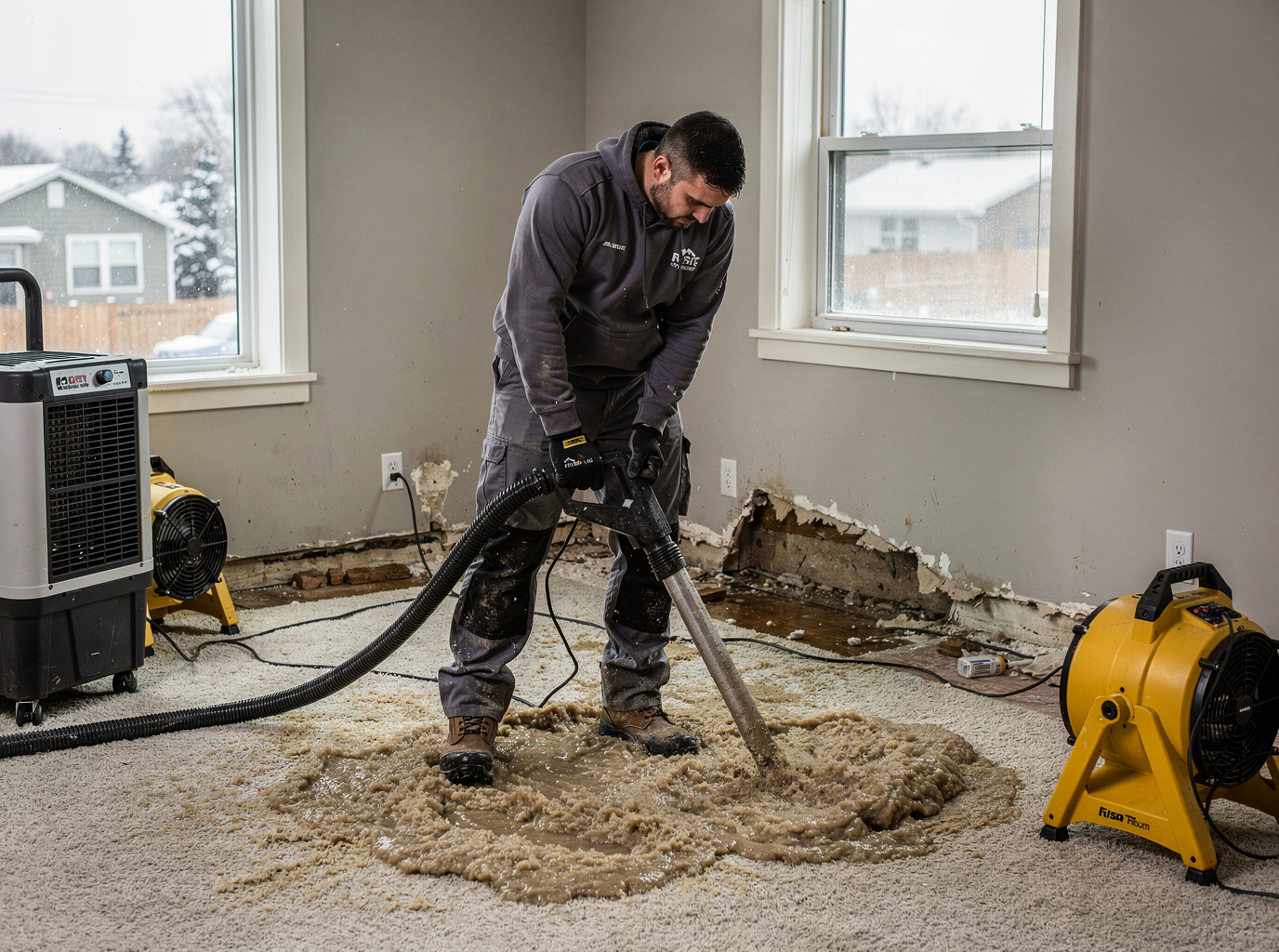
Roseville homes built in the 1950s and 60s along streets like Fairview and Victoria often sit on clay-heavy soils that hold spring meltwater. When pipes freeze during January cold snaps or sump pumps fail after a June thunderstorm, water reaches finished basements quickly. Our crew based at 4901 N Queen Ave responds directly up Snelling or Highway 36 to stop the spread before drywall and flooring are ruined.
Lots near Lake Johanna and the Harriet Alexander Nature Center back up to low drainage swales that overflow during heavy summer rains. Older split-levels and ramblers here frequently have narrow side yards and shared driveways that limit equipment access. We stage drying fans through front doors and use moisture meters on concrete slabs to map hidden moisture before mold sets in.
Commuter traffic on Highway 36 and Rosedale Center lots can slow larger trucks during rush hour, so we keep smaller extraction vans ready for same-day calls in the 55113 zip. Monday through Friday 8am-6pm and Saturday 9am-2pm we schedule around school runs at Roseville Area High School to keep disruption low for families.
Around Roseville
We regularly work near:
- 📍Rosedale Center
- 📍Central Park Roseville
- 📍Lake Johanna
- 📍Harriet Alexander Nature Center
- 📍Roseville Area High School
- 📍Snelling Avenue
Water Damage Restoration in Roseville — Local Notes
- •Mid-century ramblers near Central Park have shallow crawl spaces where meltwater pools against rim joists after March thaws.
- •Storm drains along Snelling Avenue back up during July cloudbursts because the watershed feeds into the Mississippi via low spots near the nature center.
- •Narrow driveways on streets like County Road B limit large dehumidifier placement, requiring smaller portable units and longer drying cycles.
- •Clay subsoil common in Roseville lots holds moisture longer than sandy soils found farther south in Bloomington, extending extraction time after basement leaks.