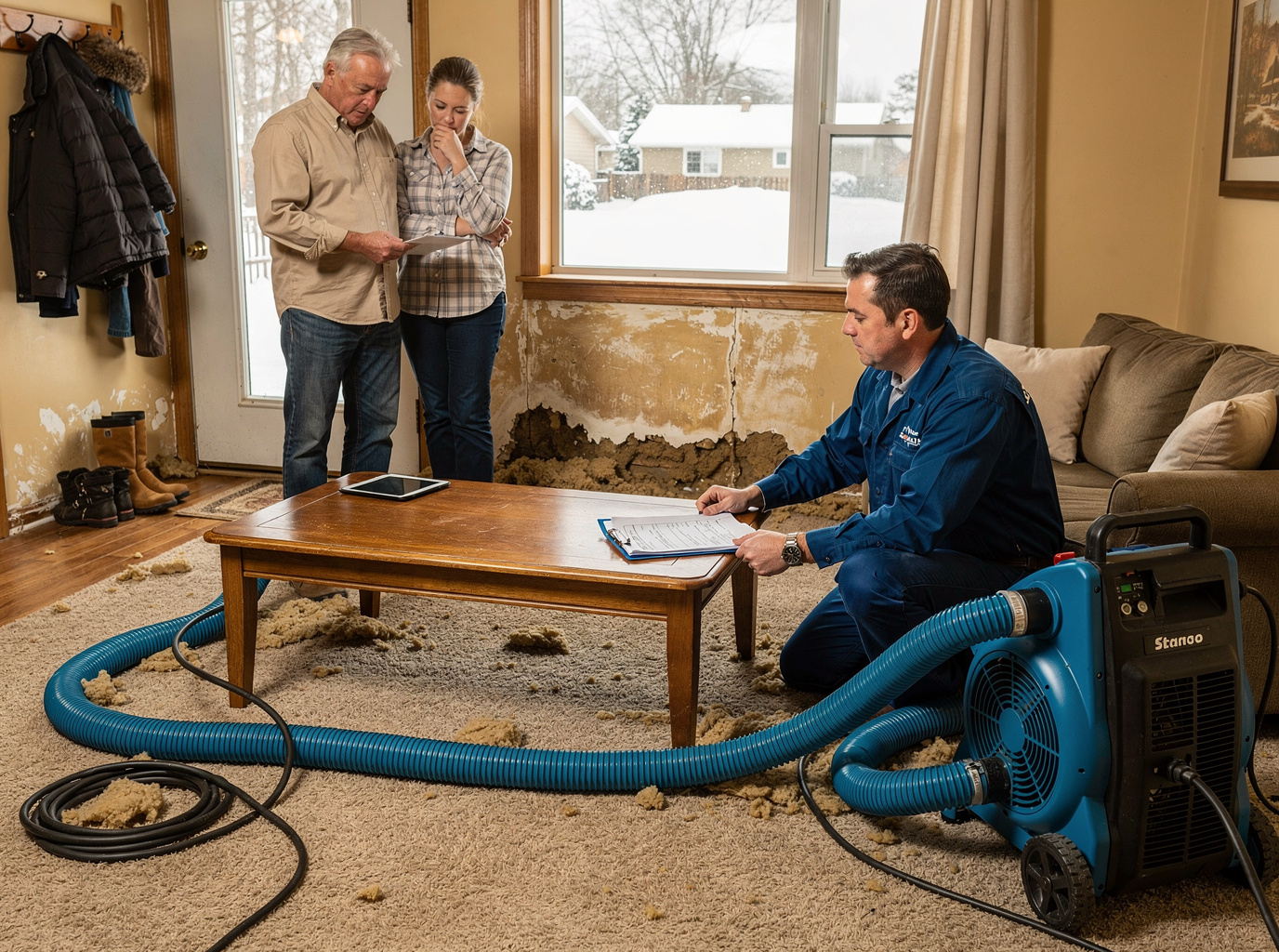
Plymouth homes sit on rolling lots that drain toward Medicine Lake and the chain of smaller ponds. Winter snow piles up against foundations then melts in March, pushing water into 1970s-era basements and crawl spaces along County Road 9 and Vicksburg Lane. Our crew leaves the Queen Ave shop at 8 a.m. and reaches most Plymouth streets before lunch when a call comes in.
Older ranch houses near French Regional Park often have clay-heavy soil that holds moisture against footings. Newer townhomes off Bass Lake Road can still flood when sump pumps fail during the warm, humid July storms. We extract standing water, set drying equipment, and return daily to check moisture levels so homeowners can reopen rooms quickly.
Access through the residential grid west of I-494 lets us bring dehumidifiers and air movers right to the door without crossing the river. We work around school schedules at Wayzata High School and avoid peak traffic on Highway 55 when scheduling equipment pickup.
Around Plymouth
We regularly work near:
- 📍Medicine Lake
- 📍French Regional Park
- 📍Plymouth Creek Center
- 📍Hidden Lake Park
- 📍Bass Lake Road
- 📍Vicksburg Lane
Water Damage Restoration in Plymouth — Local Notes
- •Plymouth lots near Medicine Lake sit on sandy loam over clay that slows drainage after heavy spring melt, so we often pull carpet and baseboards on the first visit.
- •Many 1965-1980 ranch homes have walk-out basements facing west; afternoon sun plus humid air can push mold growth in wall cavities if drying starts late.
- •Narrow driveways off Plymouth Road require smaller extraction vans during winter calls when snow banks block larger equipment.
- •Sump pump failures spike after July thunderstorms because older homes in the Hidden Lake area still use 1/3-horsepower units that cannot keep up with sudden inflow.